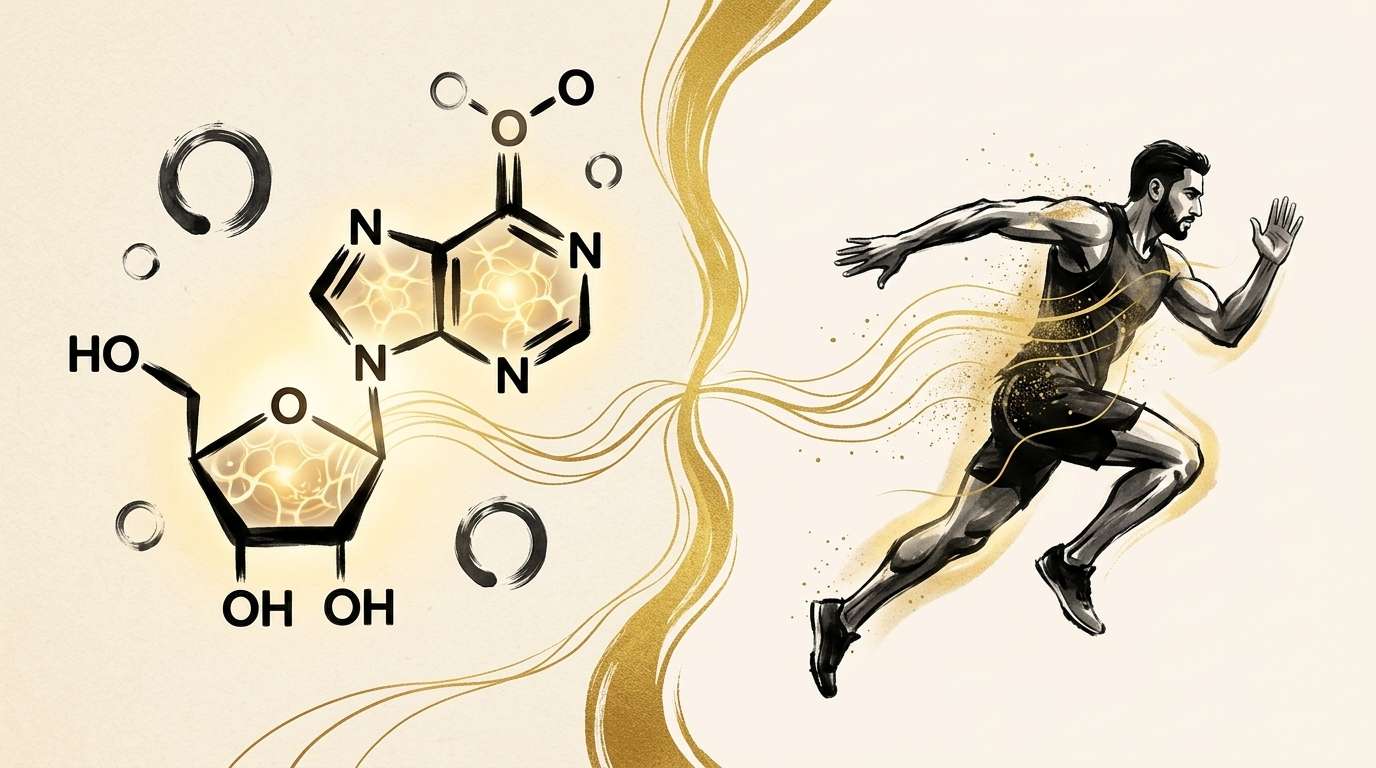
If you've been researching NAD+ supplements, you've probably hit a wall of conflicting information. One article calls them a breakthrough. The next says they're expensive placebo. So which is it — do NAD+ supplements actually work?
The short answer: yes, they raise NAD+ levels. That part is no longer debatable. A 2025 head-to-head randomised controlled trial confirmed that both NMN and NR approximately doubled circulating NAD+ within 14 days at 1 gram per day, while plain nicotinamide barely moved the needle. But "raising NAD+ levels" and "delivering the health benefits you're hoping for" are two different questions — and the evidence for each is at a different stage.
Let's walk through what the clinical trials actually show, what they don't, and what you can realistically expect.
First: Do NAD+ Supplements Actually Raise NAD+ Levels?
This is the foundational question, and it has a clear answer.
Multiple human clinical trials have now confirmed that oral NAD+ precursor supplements — primarily NMN (nicotinamide mononucleotide) and NR (nicotinamide riboside) — significantly increase blood NAD+ concentrations in humans. If you're not sure what NAD+ is or why it matters, our full explainer covers the basics.
Here's what the key trials show:
- NMN at 250 mg/day raised blood NAD+ metabolites significantly over 12 weeks in a Japanese randomised controlled trial published in Endocrine Journal
- NMN at 1,000 mg/day approximately doubled circulating NAD+ within 14 days in a 2025 comparative trial
- NR at 1,000 mg/day produced similar NAD+ elevation to NMN in the same head-to-head study
- NR at 300 mg twice daily increased blood NAD+ by roughly 50% in a Nature Communications trial
The bioavailability question — whether these molecules survive digestion and actually reach your cells — has been effectively settled. They do. The debate has moved on to what that elevated NAD+ actually does for you.
The Clinical Evidence: NMN Trials
NMN has been the subject of an accelerating number of human trials since 2021. Here's what the published data supports.
What's Been Demonstrated in Humans
- NAD+ elevation — Consistent across virtually all NMN trials, from 250 mg to 1,200 mg daily doses
- Improved insulin sensitivity — A randomised controlled trial in postmenopausal women with prediabetes found that 250 mg NMN daily for 10 weeks improved skeletal muscle insulin sensitivity by approximately 25%
- Physical performance gains — A trial published in the Journal of the International Society of Sports Nutrition found that NMN supplementation improved aerobic capacity in recreational runners
- Improved sleep quality — Older adults taking 250 mg NMN daily reported reduced drowsiness and better sleep metrics in a controlled trial
For a deeper look at NMN-specific outcomes, see our NMN benefits breakdown.
What Hasn't Been Proven Yet
- Lifespan extension in humans — While NMN dramatically extends lifespan in certain animal models, no human longevity trial has been completed
- Reversal of visible ageing — Anecdotal reports of improved skin exist, but no controlled trial has formally measured cosmetic anti-ageing endpoints
- Cognitive enhancement — Animal data is promising, but human evidence for memory or focus improvements is limited to small pilot studies
The Clinical Evidence: NR Trials
NR (nicotinamide riboside) has been studied in humans slightly longer than NMN and has a broader base of safety data. For a direct comparison of the two, our NMN vs NR analysis covers the full picture.
What's Been Demonstrated in Humans
- NAD+ elevation — Consistent and dose-dependent across multiple trials
- Cerebral NAD+ repletion — An important Parkinson's disease trial showed NR increased NAD+ levels in the brain, with some participants showing clinical improvement
- Improved mitochondrial function — A trial in older adults found NR improved mitochondrial membrane potential, a marker of cellular energy capacity
- Reduced inflammation — NR supplementation lowered circulating inflammatory markers in some trials
What Hasn't Been Proven Yet
- Cardiovascular outcomes — A well-designed trial testing NR for heart failure did not find a significant benefit on primary endpoints
- Definitive anti-ageing effects — As with NMN, biomarker improvements are consistent, but hard clinical ageing endpoints remain unproven
NAD+ Supplement Before and After: What to Realistically Expect
This is where most supplement marketing goes off the rails. So here's an honest, evidence-grounded timeline of what happens when you start an NAD+ precursor supplement.
Hours to Days: NAD+ Starts Rising
Pharmacokinetic studies show blood NAD+ metabolites increase within hours of the first dose. Your cells are converting the precursor into NAD+ almost immediately. You won't feel this — it's happening at a molecular level.
Week 1-2: NAD+ Reaches New Baseline
By roughly day 14, your circulating NAD+ has approximately doubled. Some people report a subtle uptick in energy during this window. Many feel nothing yet. Both responses are normal.
Week 2-4: Subjective Benefits Emerge
This is the window where the most commonly reported benefits start showing up: steadier energy through the afternoon, slightly better sleep, less post-exercise fatigue. These aren't dramatic changes — they're subtle shifts that accumulate.
Month 2-3: The Compound Effect
Longer-term cellular improvements — better skin hydration, more consistent exercise recovery, improved metabolic markers — need sustained NAD+ elevation over weeks to months. This is where patience matters.
For a detailed week-by-week breakdown of what to expect, our NMN before and after timeline maps it out in full.
Why Some People Feel Nothing
This is one of the most common frustrations in the NAD+ supplement space — and it has several legitimate explanations.
You're Under 40
If you're younger, your baseline NAD+ levels are still relatively high. Supplementation is still raising them, but the gap between "before" and "after" is smaller. A 25-year-old might get a 30% boost where a 55-year-old gets a 100% boost from the same dose. The younger person is less likely to notice a subjective difference.
The Dose Is Too Low
Clinical trials showing meaningful benefits typically use 250-1,000 mg of NMN daily. If you're taking 125 mg from a product that's been sitting in a hot warehouse for six months, the effective dose reaching your cells may be well below the therapeutic threshold.
Poor Product Quality
Not all NAD+ supplements are equal. Factors that affect bioavailability include:
- Purity — Third-party tested products with >98% purity deliver what's on the label
- Stability — NMN degrades when exposed to heat and moisture; proper storage and packaging matter
- Form — Some delivery systems (enteric-coated capsules, sublingual) may improve absorption compared to basic powder capsules
You're Expecting the Wrong Thing
NAD+ supplementation is not like taking a stimulant. It doesn't produce an obvious, immediate sensation. It restores a molecule your cells use for maintenance and repair. The effects are often described as "feeling 10 years ago's normal" rather than "feeling a buzz." If you're looking for a noticeable energy spike, you'll be disappointed. If you're looking for gradual, sustained improvement in how well your body functions, the evidence supports that expectation.
Individual Variation Is Real
Genetics, gut microbiome composition, diet, sleep, exercise habits, and existing health conditions all influence how your body processes and responds to NAD+ precursors. Two people taking the identical supplement at the identical dose will not have identical experiences. This is true of virtually every supplement and medication.
Common User Experiences vs What's Actually Proven
Let's be transparent about the gap between what people report and what clinical trials have confirmed.
| Reported Benefit | User Reports | Clinical Evidence |
|---|---|---|
| More stable energy | Very common (weeks 1-3) | Supported by improved mitochondrial function data |
| Better sleep | Common (weeks 2-4) | One controlled trial supports this for NMN |
| Faster exercise recovery | Common (months 1-2) | Supported by aerobic capacity and performance trials |
| Improved skin quality | Moderately common (months 2-3) | Not yet tested in controlled cosmetic trials |
| Weight management | Occasionally reported | Limited to insulin sensitivity improvements |
| Sharper mental clarity | Occasionally reported | Minimal human evidence; animal data is promising |
| Reduced joint discomfort | Occasionally reported | No direct clinical evidence |
The honest summary: the most commonly reported benefits (energy, sleep, recovery) align reasonably well with what the clinical data supports. The less common claims (dramatic skin transformation, cognitive leaps, weight loss) are running ahead of the evidence.
What the Evidence Does and Does Not Support
What We Can Confidently Say
- NAD+ supplements raise NAD+ levels in humans. This is well-established across multiple independent trials.
- NAD+ declines significantly with age. Restoring it addresses a real biological deficit, not a manufactured one.
- Elevated NAD+ improves specific measurable outcomes — insulin sensitivity, certain physical performance metrics, and mitochondrial function markers.
- Safety profiles are strong. Both NMN and NR have been tested extensively with no serious adverse effects.
What We Cannot Confidently Say (Yet)
- NAD+ supplements extend human lifespan. No trial has run long enough to test this.
- They prevent or treat specific diseases. The Parkinson's NR trial is intriguing but preliminary.
- Everyone will feel a noticeable difference. Individual responses vary significantly.
- Higher doses are always better. Dose-response curves are still being mapped in human trials.
The Bottom Line
Do NAD+ supplements work? If "work" means raising NAD+ levels — yes, conclusively. If "work" means delivering the health benefits people are hoping for — the evidence is genuinely promising but still maturing.
The strongest case for NAD+ supplementation is this: NAD+ decline with age is real, measurable, and linked to virtually every hallmark of ageing. Restoring those levels with NMN or NR is safe, effective at the molecular level, and supported by a growing body of human clinical data showing functional improvements.
The weakest case is expecting miracles. NAD+ supplements are not going to make you look 25 again or cure chronic disease. They're a tool for supporting better cellular function — and the evidence suggests they do that well.
If you're considering trying NAD+ supplementation, start with a quality NMN product at 250-500 mg daily, give it 4-8 weeks, and pay attention to subtle changes in energy, sleep, and recovery rather than looking for dramatic overnight transformation. That's what the science supports, and it's a reasonable expectation.